How to Remove Wind Noise from a Video You Already Shot
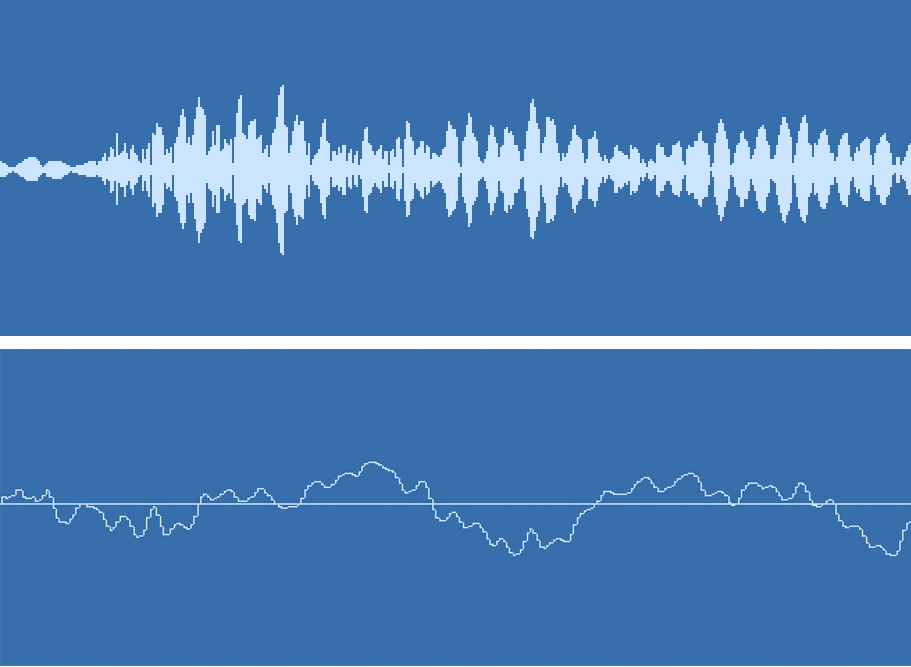
Wind is low rumble, mostly 20 to 250 Hz. Cut that range first. A denoise button will not rebuild a clipped gust.
Wind noise is air hitting the microphone, not a steady hiss behind the voice. On a video you already shot, you can turn down the low rumble. You cannot rebuild a word that a hard gust clipped. If the sentence is still understandable, a small cut is worth trying. If the voice breaks, keep the original or reshoot.
Key Takeaways
- RØDE describes wind as low-frequency vibration, mostly around 20 Hz to 250 Hz, heard as rumble.
- A foam cover, a furry, or a blimp during the shoot does more than any slider afterward. Post is the last resort.
- On a finished file, start with a high-pass or a cut in that low range. Do not profile one gust as if it were a fan.
- Strong wind is harder for a speech denoise control than a steady room. Listen to one sentence before you export.
Why the rumble is so loud
RØDE's outdoor-recording guide says a microphone diaphragm is built for the small air movement of a voice. Wind moves much more air, so the diaphragm vibrates hard at low frequencies. That vibration is the rumble. RØDE also says this matters when you try to tame wind in post: the energy sits around 20 Hz to 250 Hz, in the bass and sub-bass. (RØDE: Ways to Reduce Wind Noise, retrieved 2026-10-17.)
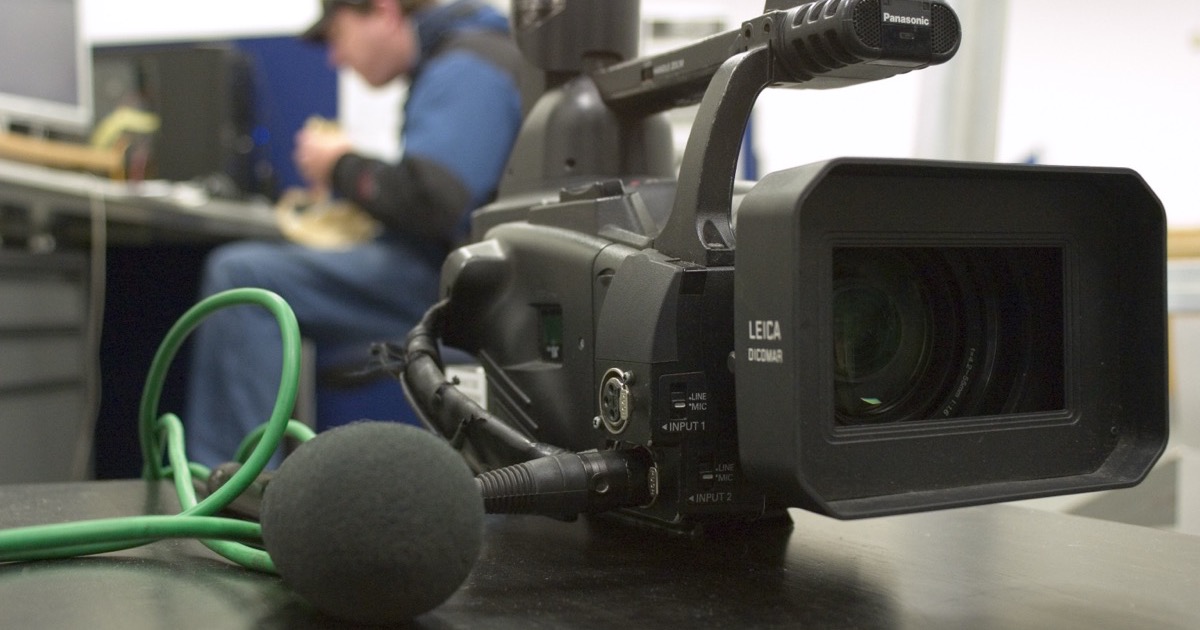
Omnidirectional capsules generally handle wind, plosives, and other hard air movement better than directional capsules. That is one reason many lavaliers are omnidirectional, and one reason a shotgun usually needs a foam cover, a furry, or a blimp. A furry can also soften high frequencies. If you used one, you may need a small high-frequency lift later, not only a low cut.
A bark is a different irregular sound. It is not this low rumble. The decision for a bark on top of a word is in removing dog barking.
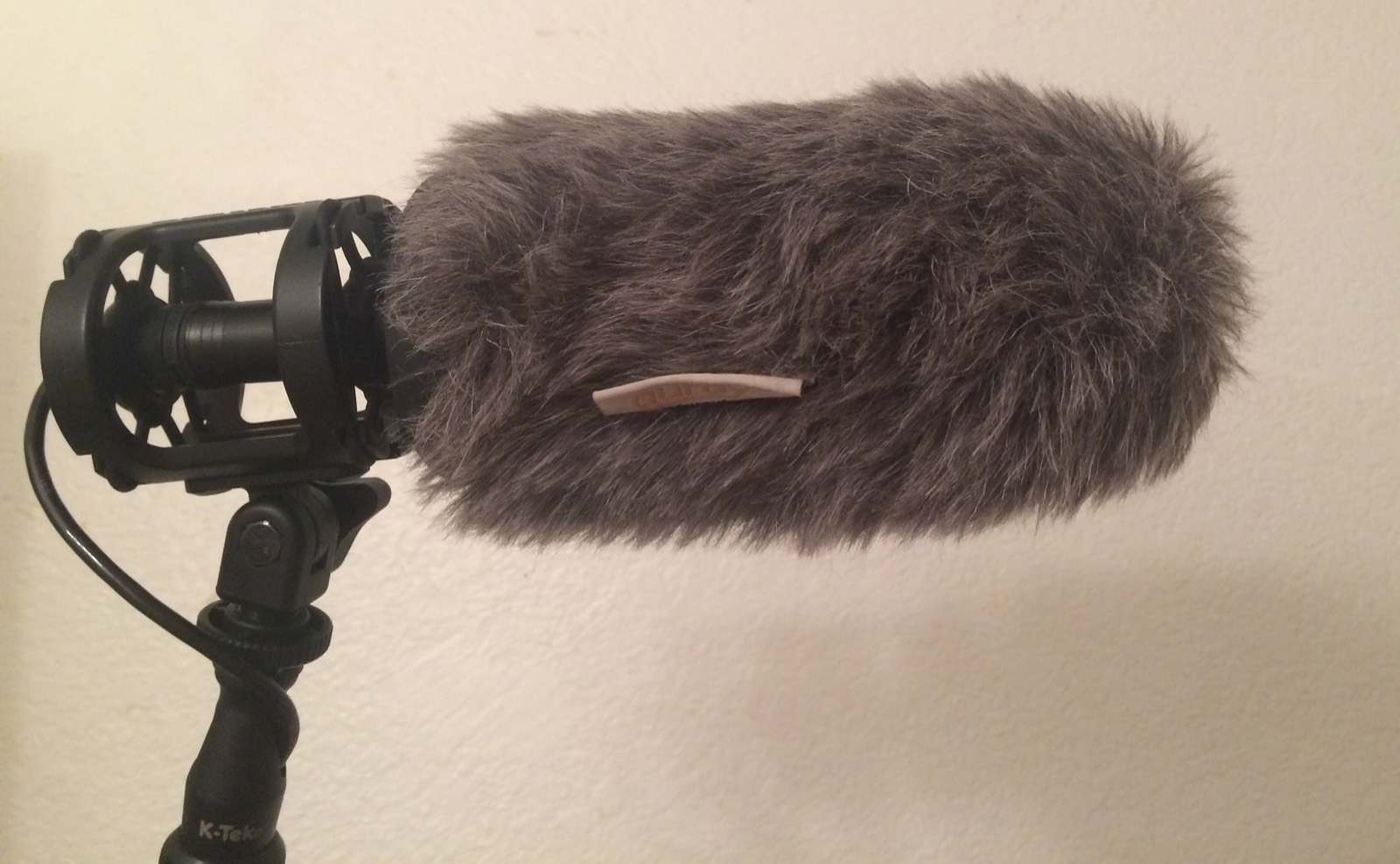
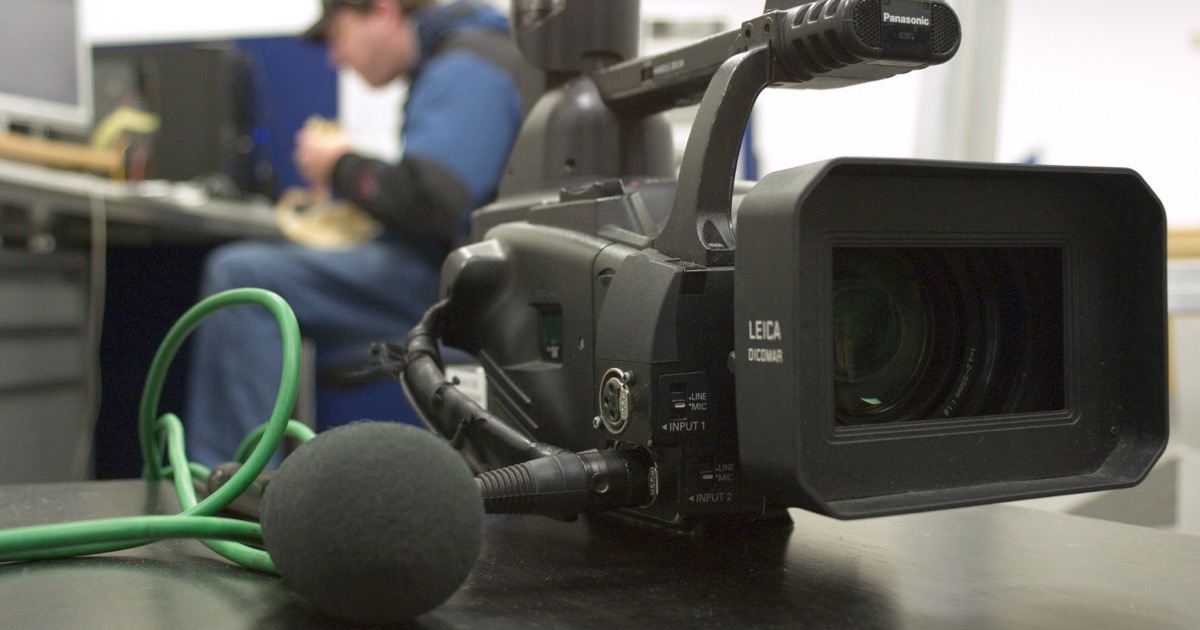
Photo: Heyyouoverthere, CC BY-SA 4.0, via Wikimedia Commons.
If you can still reshoot, do that first
RØDE calls post-production a last resort, for a take you cannot record again. On the next take:
- Use the foam windshield that came with the mic. It should sit snug so air flows around it.
- Add a furry or a blimp when the foam is not enough. A furry is for stronger wind. A blimp surrounds the mic and adds more protection.
- Move the mic or the person. A wall, a car, a tree, or the person's own body can block a gust. A lavalier inside a shirt pocket is often quieter than the same mic on the outside of clothing.
- If the microphone has a high-pass switch, use it while recording. RØDE says many video mics include one so the low rumble never reaches the recorder.
None of those steps edits the file you already have. They stop the next one from having the same problem.
Cut the rumble on the file you already have
RØDE's post step is an equalizer, not a magic denoise button. Pull the audio into the editor you already use. Cut frequencies around 20 Hz to 250 Hz, or apply a high-pass filter, and listen. A male voice still has energy in the lower part of that range, so a steep cut at 250 Hz can thin the speaker. Start lower, preview one sentence, and stop when the rumble drops and the voice still sounds like the same person.
Adobe Audition separates two tools here. Adaptive Noise Reduction is the one Adobe describes for variable broadband noise such as background sounds, rumble, and wind. It runs in real time, including in the Multitrack Editor. The ordinary Noise Reduction effect is better at constant noise such as hiss or hum, and it needs a noise print from the Waveform Editor. A print of one quiet gap will not describe a gust that only hits some words. (Audition noise reduction, retrieved 2026-10-17.) The print method, for a fan or a hiss, is in Adobe Audition.
Audacity's Noise Reduction has the same constant-noise limit. The manual says it is not suitable for irregular noise such as traffic or an audience, and that a satisfactory removal may be impossible when the noise is variable or very loud. Use it after the high-pass, and only on a steady hiss that is still left. Do not take the profile from a gust. The steps are in how to remove background noise in Audacity.
CapCut's own noise page puts strong wind in the harder group, with clipping, competing voices, and heavy room echo. A steady background is easier to separate from speech than a sudden sound on an important word. If Reduce noise makes the voice thin or watery, undo it. The click path is in CapCut noise reduction.
Hear one windy sentence before you process the file
EraseNoise can play the first 30 seconds of a saved video on the video noise remover. Pick a sentence where the wind is actually present. If that sentence is easier to follow and the speaker still sounds like themselves, the file is worth processing. If the gust still knocks the word out, the preview told you the truth. A cleaned video comes back as MP4, with the picture unchanged. A cleaned audio file comes back as WAV. The limits are 30 minutes and 500 MB.
The general path for a saved video, including Premiere and DaVinci Resolve, stays in how to remove background noise from video you already shot.
Open this page for rumble, not for a fan
A fan is steady and can be profiled. Wind changes, and most of its energy is low. Cut that low range first, then decide whether a dialogue cleanup helps the words that were not clipped. If you are about to shoot again, put a furry on the mic before you open another slider.
Frequently asked questions
Can I remove wind noise from a video I already shot?
You can reduce the low rumble. RØDE says wind noise is mostly around 20 Hz to 250 Hz, and that fixing it in post should be a last resort. A high-pass or a careful cut in that range is the first edit. A gust that clipped the voice will not come back as a clean word. (RØDE: Ways to Reduce Wind Noise, retrieved 2026-10-17.)
Should I use a noise profile on the wind?
Not on the gust itself. Audacity's Noise Reduction and Audition's Noise Reduction are documented for constant noise. Adobe points variable rumble and wind to Adaptive Noise Reduction instead. Profile the steady hiss that remains after the low cut, not the blast of air.
Will a furry fix a file I already recorded?
No. Foam, a furry, and a blimp work while the air is hitting the capsule. They do nothing to a file that is already saved. Use them on the next take. On this take, use the equalizer and then listen to one sentence.